

Food sources for eye nutrients, market by market
This page is for people who would rather adjust dinner than buy a bottle. It maps each eye-relevant nutrient to foods you can find in an Indonesian market or supermarket, with notes on how to eat them so the nutrients are actually absorbed.
Lutein, zeaxanthin, omega-3s, vitamin C and E, zinc and selenium — what to put on the plate.
Everyday food sources worth knowing
A few of these notes matter more than you would expect. Fat-soluble nutrients need fa, and cooking method changes how much you actually get. The pages below take each food group in turn and explain the small kitchen habits that decide whether the nutrients in the dish reach you or stay in the pan.
Leafy greens: the lutein and zeaxanthin aisle
Spinach, kale, kangkung, and sawi are all solid sources of lutein and zeaxanthin. These are the two carotenoids that concentrate in the macula, which is why greens earn their reputation honestly rather than by marketing. Lutein and zeaxanthin are the carotenoids most often discussed alongside macular pigment density, and leafy greens supply both at the same time.
Cook them with a little oil rather than boiling them into a watery soup. The carotenoids are fat-soluble, so a spoon of cooking oil in the wok does real work here — it is one of the few places where a small kitchen habit changes how much of a nutrient you actually absorb.
Kangkung and sawi are the everyday versions in most Indonesian kitchens, and both behave the same way in the pan. A quick stir-fry keeps the leaves bright and the oil carries the carotenoids into the dish. Long boiling leaches more of what you came for into water you then pour away.
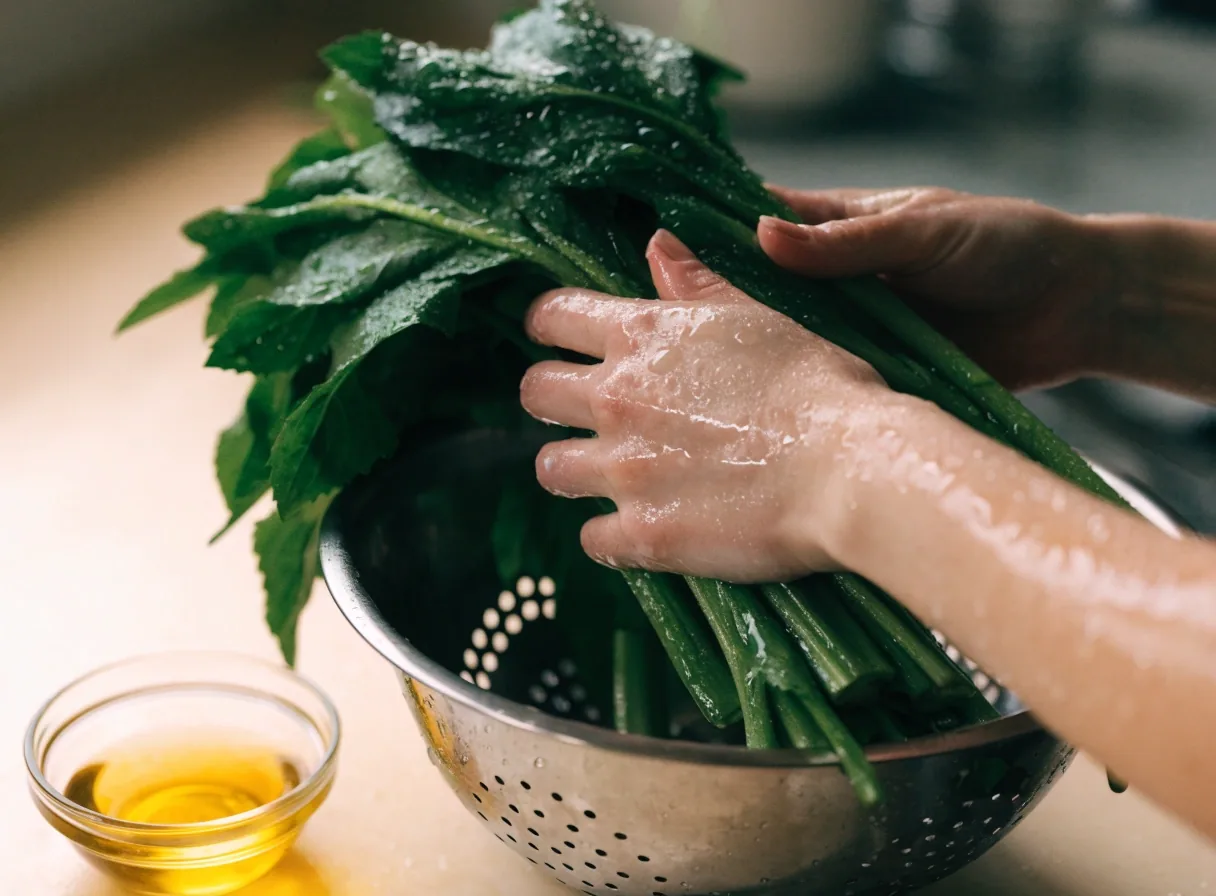
Bowl of oil at the ready: carotenoids need a fa carrier to leave the leaf and reach you.
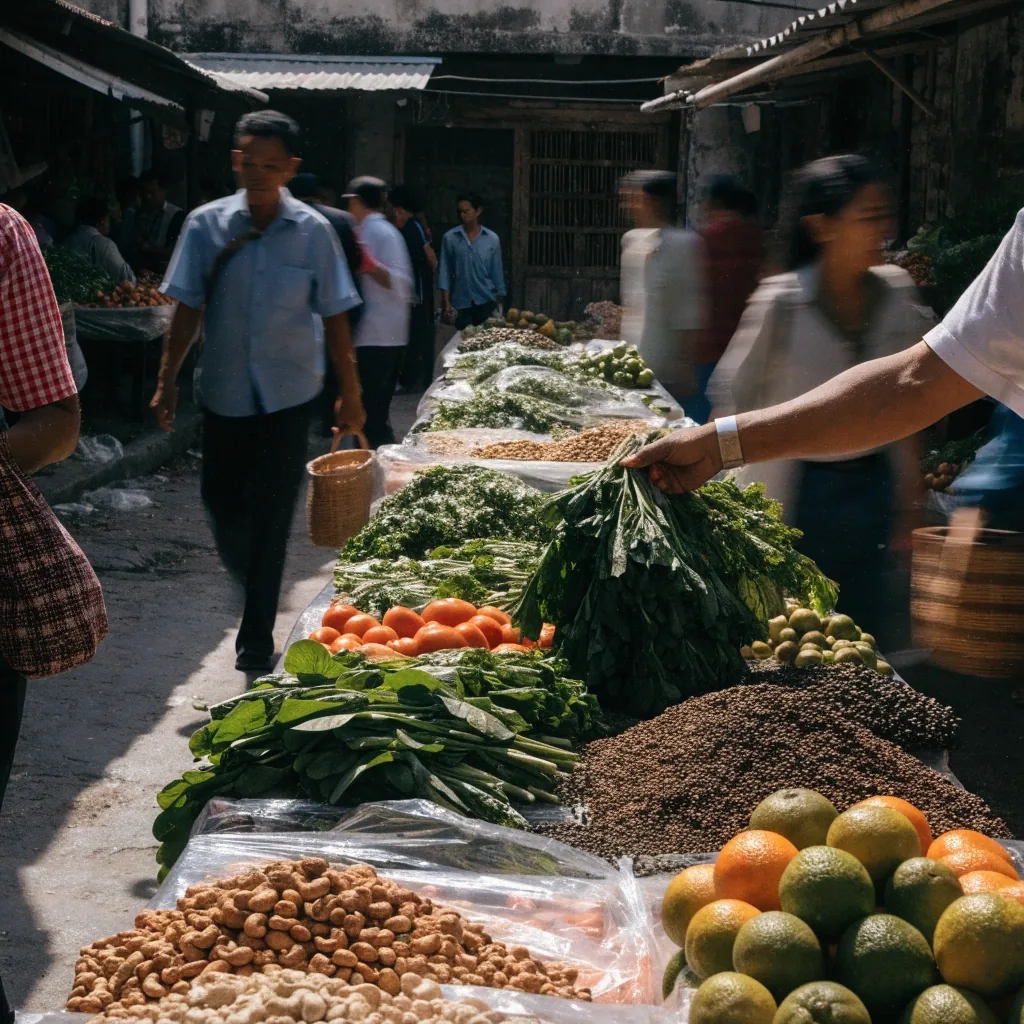
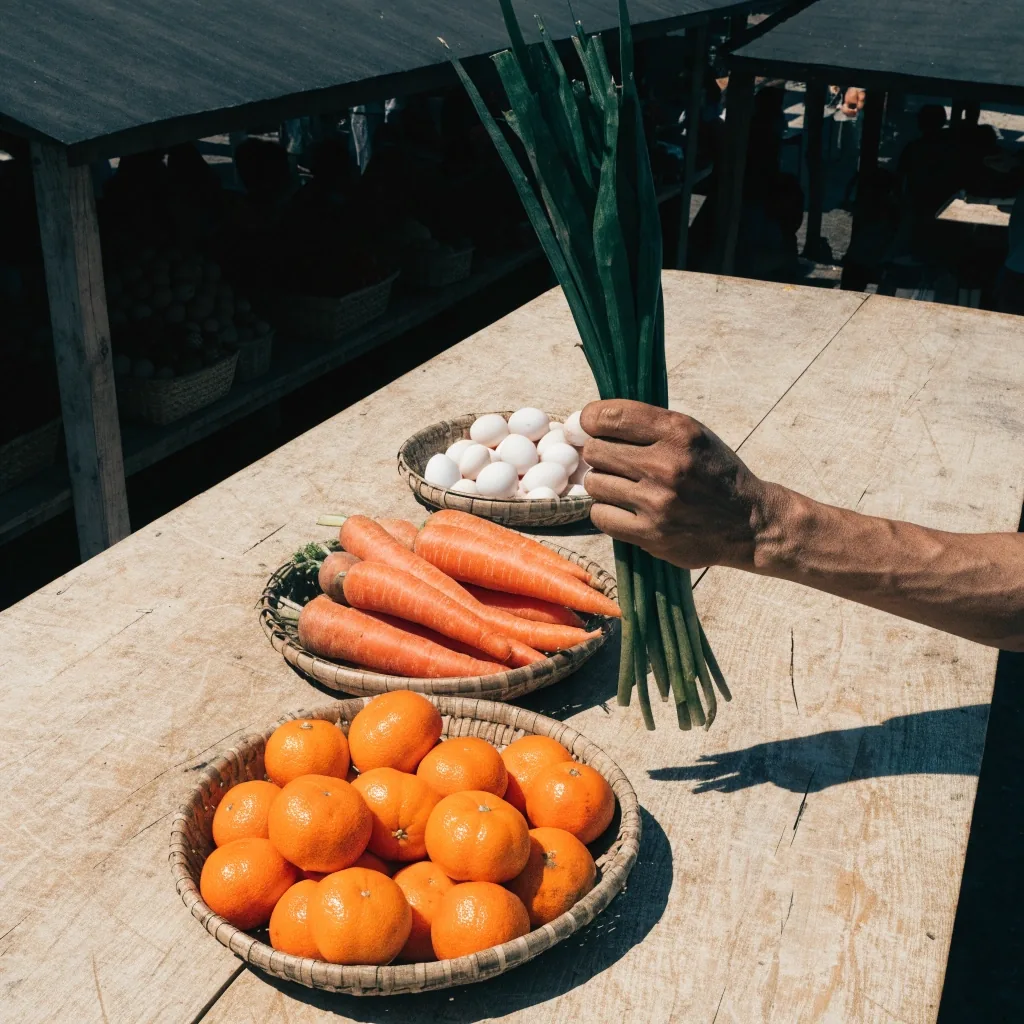
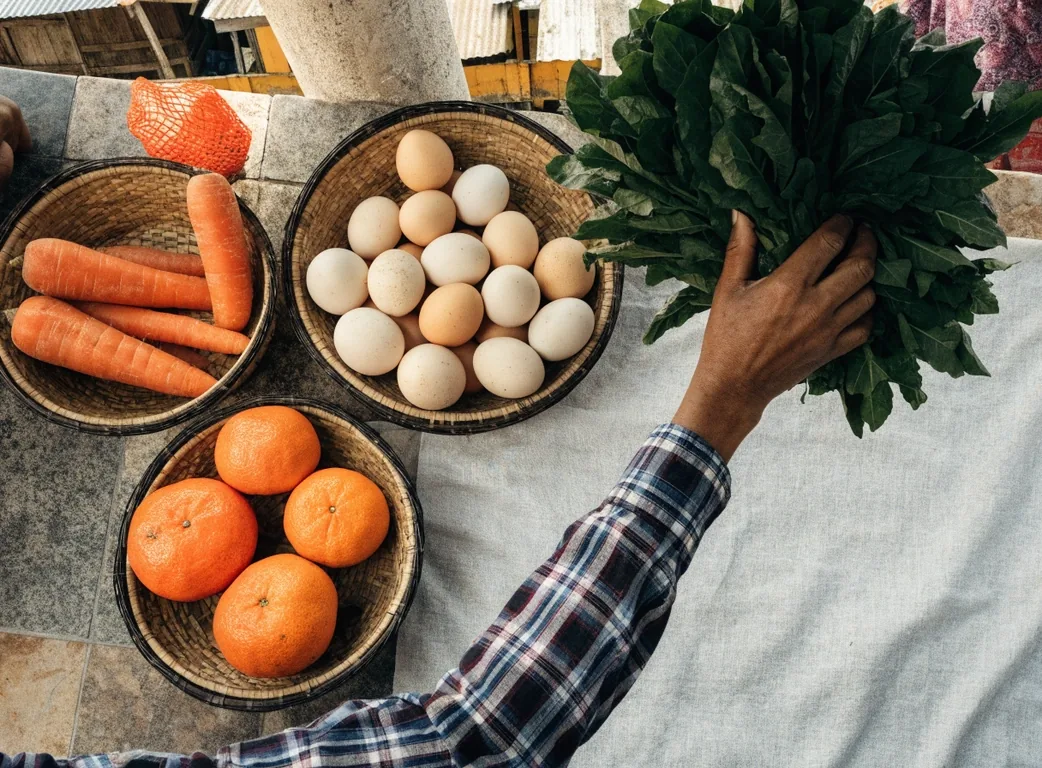
Fresh fish, greens, eggs and nuts are all within a short walk of most households here — no supplement shelf required.
Fish and the omega-3 question
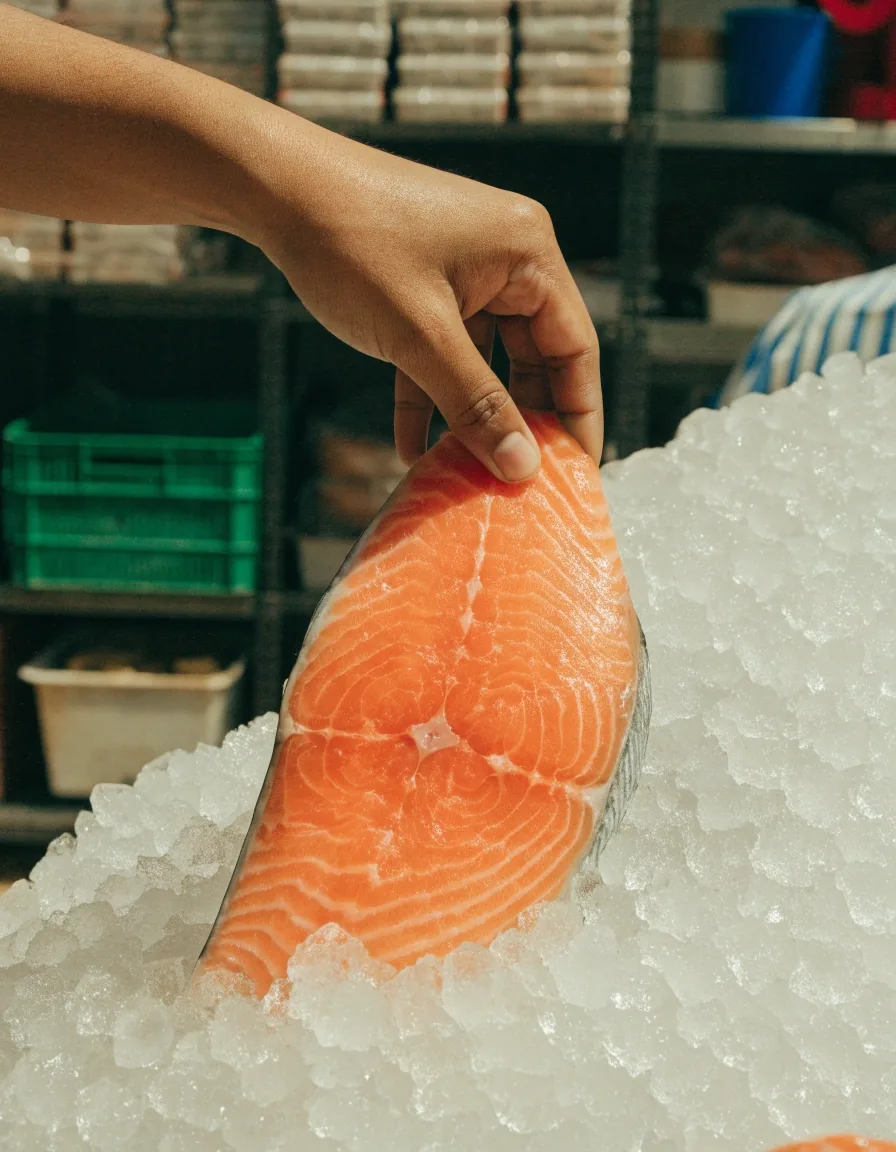
Tuna and other oily fish are the usual recommendations, with flaxseed and walnuts as plant alternatives. Omega-3 fatty acids are commonly discussed for dry eye and retinal health, though reviews of omega-3 supplements have not shown a clear benefit for AMD. Eating fish regularly is a reasonable habit for general health regardless of how that debate settles.
In Indonesia, fresh fish is often cheaper and better than any supplement containing the same fats. The market does most of the work: a fillet bought that morning beats a capsule that has been sitting in a warehouse, and it arrives with protein your body uses for other things too.
Oily fish
Tuna, mackerel, sardines and kembung all bring long-chain omega-3s in a form the body uses directly, with no conversion step required.
Plant routes
Flaxseed, chia and walnuts carry a shorter-chain fa the body has to convert, so gram for gram they deliver less. Useful, but not a direct swap for fish.
How often
Twice a week is a comfortable rhythm that fits most households and gives the omega-3 habit room to become ordinary.
Eggs, the underrated one
Egg yolk contains both lutein and zeaxanthin, and it is one of the better-absorbed dietary sources of either. It also provides vitamin A and some selenium. Eggs are cheap, available everywhere in Indonesia and need no special preparation to be useful.
If you eat greens and eggs in the same week, you have covered the most eye-specific nutrients without ever thinking about it as a diet. That is roughly the whole point of this page.
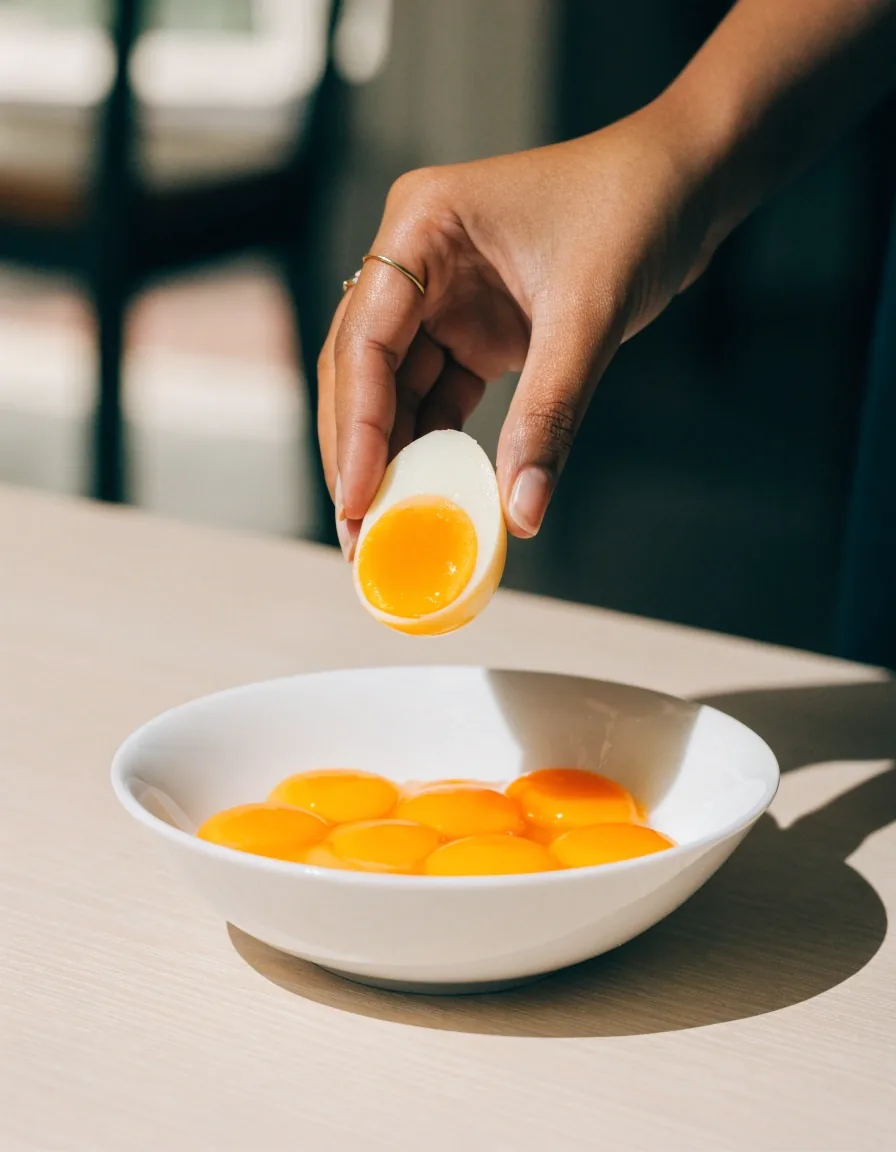
Yolk carries lutein and zeaxanthin in a form the body absorbs well from an ordinary plate.
Vitamin C in ordinary produce
Citrus, kiwi, berries, tomatoes and potatoes all provide vitamin C, and leafy greens add more on top. Potatoes are worth naming because they are a daily staple in many households and people tend not to count them as a nutrient source at all. Boiling them into a soup keeps most of the vitamin C if you eat the broth; peeling and long soaking leaches some away.
Vitamin C is described as an antioxidant that helps protect eye tissues from oxidative damage. It works as part of a pattern alongside vitamin E and zinc rather than as a solo solution, which is the recurring theme across this whole page.
Where it turns up without effort
- Tomato in a sambal or a salad, eaten raw or lightly cooked.
- Potato in a daily soup or stew, with the broth finished at the table.
- Citrus and kiwi as a between-meals fruit rather than a dessert.
- Leafy greens added late to the wok so they keep more of what they carry.
Vitamin E: nuts, seeds, oils
Vitamin E appears in nuts, seeds and vegetable oils, which makes it relatively easy to obtain in a normal diet — especially if you cook with oil rather than only steaming. It is part of the classic AREDS antioxidant formulation for certain AMD risk groups, but at the table it is simply one more antioxidant arriving with your food. You do not need to engineer a separate source for it.
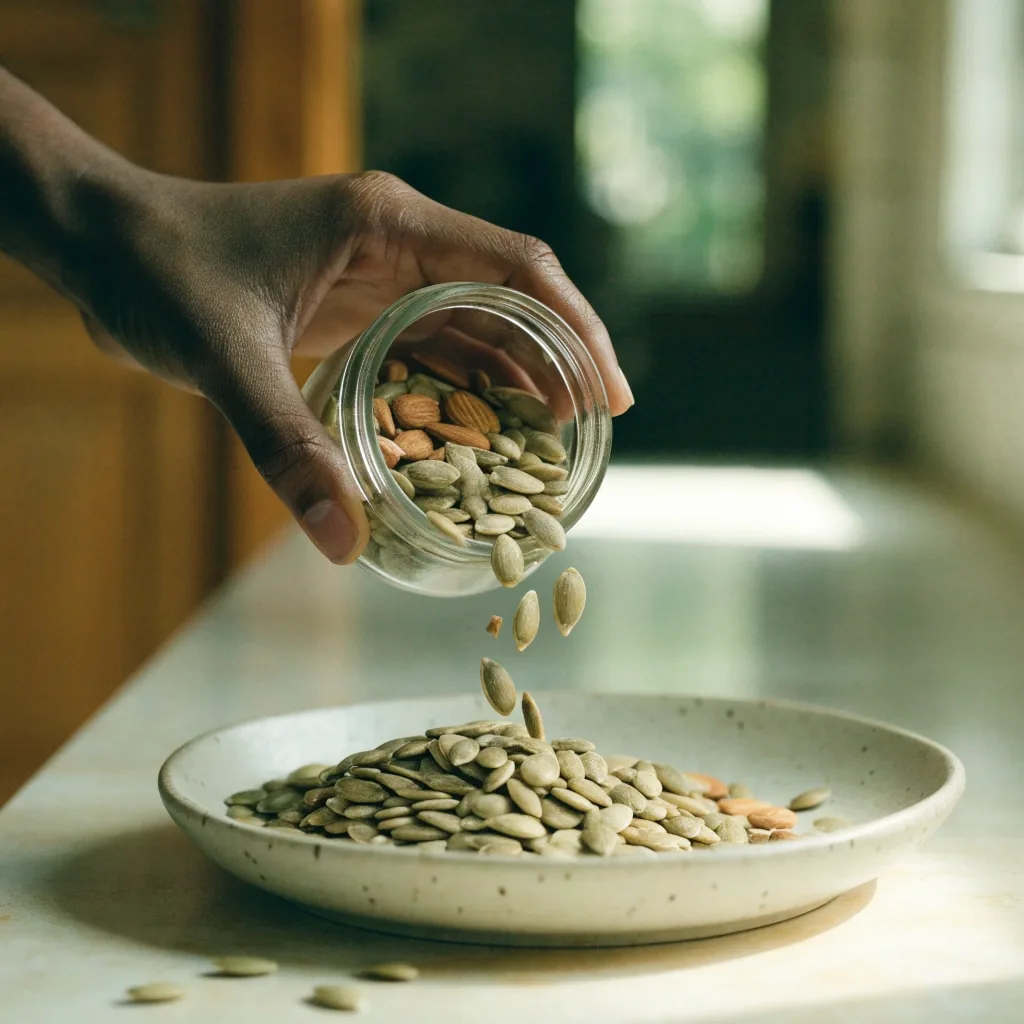
Cook with oil
A normal cooking oil contributes vitamin E to whatever is in the pan, and it helps the carotenoids from the greens at the same time.
Nuts as a snack
A small handful of mixed nuts covers vitamin E and zinc together, and it fits the rhythm of an ordinary afternoon.
Zinc from beans, lentils, and nuts
Beans, lentils and nuts are the common food sources of zinc. These are everyday ingredients in Indonesian cooking, which means zinc is rarely a nutrient you have to hunt for. It is described as important for retinal metabolism and antioxidant defense, and it appears in AREDS formulations used for specific AMD cases.
The food route and the clinical route are different contexts. This page is about the first — what turns up in a pot of tempeh, a bowl of lentils or a plate of sautéed beans, cooked the way you already cook them.
Tempeh
Fermented soybean cake, a staple protein across Indonesia and a steady source of zinc in ordinary weeknight meals.
Pairs well with greens cooked in a little oil, since the two nutrients travel together.
Lentils
Cheap, shelf-stable and quick to soften, which makes them a reliable zinc source to keep in the pantry.
A lentil soup reheats well, so the habit survives a busy week.
Nuts and seeds
Pumpkin seeds, cashews and peanuts add zinc on top of the vitamin E they already carry.
Also the axis where zinc and vitamin E meet in the same sniff of the snack bowl.
Sweet potato, carrots, and vitamin A
Carrots get all the attention, but sweet potato and liver are more concentrated sources of vitamin A, with eggs contributing as well. Vitamin A has a structural role in the retina, and severe deficiency has visible consequences. That does not mean more is better — this is a nutrient where adequacy is the goal and excess has no benefit.
Low-effort sources
Sweet potato, pumpkin and carrots all deliver provitamin A, and they keep for days without any special storage. A roasted sweet potato or a carrot in a sambal does the job quietly alongside the rest of the meal.
A little oil again helps absorption, which is the same pattern the greens chapter kept pointing at.
Concentrated sources
Liver is far denser in preformed vitamin A than any vegetable. Eggs contribute a smaller amount in a form the body handles gently, and they show up at breakfast without any planning.
Because liver is so concentrated, it is a weekly or fortnightly dish rather than a daily one. There is no benefit in pushing beyond what the body needs.
Selenium: fish, eggs, and a caution on Brazil nuts
Selenium appears in fish, eggs and Brazil nuts. Medical sources describe it as an antioxidant mineral relevant to AMD and cataracts, though it gets less attention than zinc or lutein. The food route is easy to cover in Indonesia, since fish and eggs are already part of most weeks.
One practical note on Brazil nuts: they are extremely concentrated in selenium, so a small handful is plenty. Treating them like a snack food is not the same as including them occasionally. A couple of nuts now and then is the honest portion.
About supplements
This page is about food. Dietary supplements are not medicines, and any decision to use them belongs with a qualified professional who knows your situation.
For the clinical side of the picture, the AREDS and AREDS2 explainer covers what those formulations were designed for and where the evidence stands.
Building a plate rather than a checklist
You do not need to hit every nutrient daily. A weekly pattern that includes greens cooked with oil, fish, eggs, beans and some fruit covers most of what this site discusses. The nutrients interact, and the carotenoids compete with each other for absorption, so variety does work that single-food focus does not.
That is the least technical advice on the site, and probably the most useful. If a dish already contains two or three items from this page, it is doing more than a plate built around one "superfood" ever will.
A weekly pattern that works
- Greens + oil Two or three stir-fries a week with kangkung, sawi or spinach bring in lutein and zeaxanthin in a form the body absorbs.
- Fish twice Two fish meals a week covers the omega-3 side without needing to think about it beyond the market stall.
- Eggs freely Eggs at breakfast or as a side cover lutein, zeaxanthin and vitamin A at almost no cost per serving.
- Beans + nuts Tempeh, lentils and a handful of nuts or seeds bring zinc and vitamin E into the same week.
- Fruit daily Whatever citrus, kiwi or tomato is in season keeps vitamin C in the picture without any planning.
Practical questions about eating for eye nutrients
These come up often enough that they belong on the same page as the food list. If you want the broader set, the common questions page has more.
Do I need to eat every nutrient on this page, every day?
No. The point of the weekly pattern above is that variety across a week covers the ground better than a daily checklist. Nutrients interact, and the carotenoids compete with one another for absorption, so a mixed plate on most days is doing more useful work than a strict daily count.
Does cooking destroy the lutein in greens?
Not in a way that makes greens pointless. Cooking softens the plant cell walls, which can release carotenoids and actually help absorption, provided there is some fa in the dish. What does hurt is long boiling that leaves the nutrients in water you throw away. A quick stir-fry with a little oil is the practical version here.
Can food replace an AREDS-type supplement?
They are not interchangeable. AREDS and AREDS2 formulations were built for specific AMD risk groups at studied doses, and the food pattern on this page is a general nutrition habit rather than a treatment substitute. If you are wondering about the clinical side, the AREDS and AREDS2 explained page covers what those formulations contain and who they were studied in. Any decision about using them belongs with a qualified professional.
How many Brazil nuts are reasonable at one sitting?
A small handful is generous. Brazil nuts carry selenium at a level no other nut comes close to, so a couple at a time is a sensible portion. Treating them as an everyday snack is what makes them worth mentioning at all in this chapter.
Keep reading
If the food list answered the easy half, the nutrient guide covers what each of these nutrients actually does and where the evidence is thin.
Questions about the material, or a correction you want us to look at? Contact the editors at Insightful Eye Open — Jl. Cikini Raya No. 58, Menteng, Jakarta Pusat 10330, Indonesia · [email protected] · Monday to Friday, 09:00–18:00 WIB. Contact the editors.