

A guide to the nutrients your eyes use
This page goes nutrient by nutrient, without ranking them into a league table. Each entry covers what the nutrient does in the eye, where it occurs in food you can actually buy in Indonesia, and how it relates to the others.
Nine nutrients, one page — read lutein and zeaxanthin first if you read nothing else.
Start with lutein and zeaxanthinThe nutrients on this page
Lutein
What it does
Lutein is a carotenoid that concentrates in the macula, the central part of the retina responsible for detailed vision. It is the nutrient most directly associated with the retina itself rather than with the eye in general.
Food sources include spinach, kale, and local greens like kangkung and sawi, plus egg yolk. Cooking greens and serving them with a little oil improves absorption, which is a small habit with a real effect on how much you actually take in.
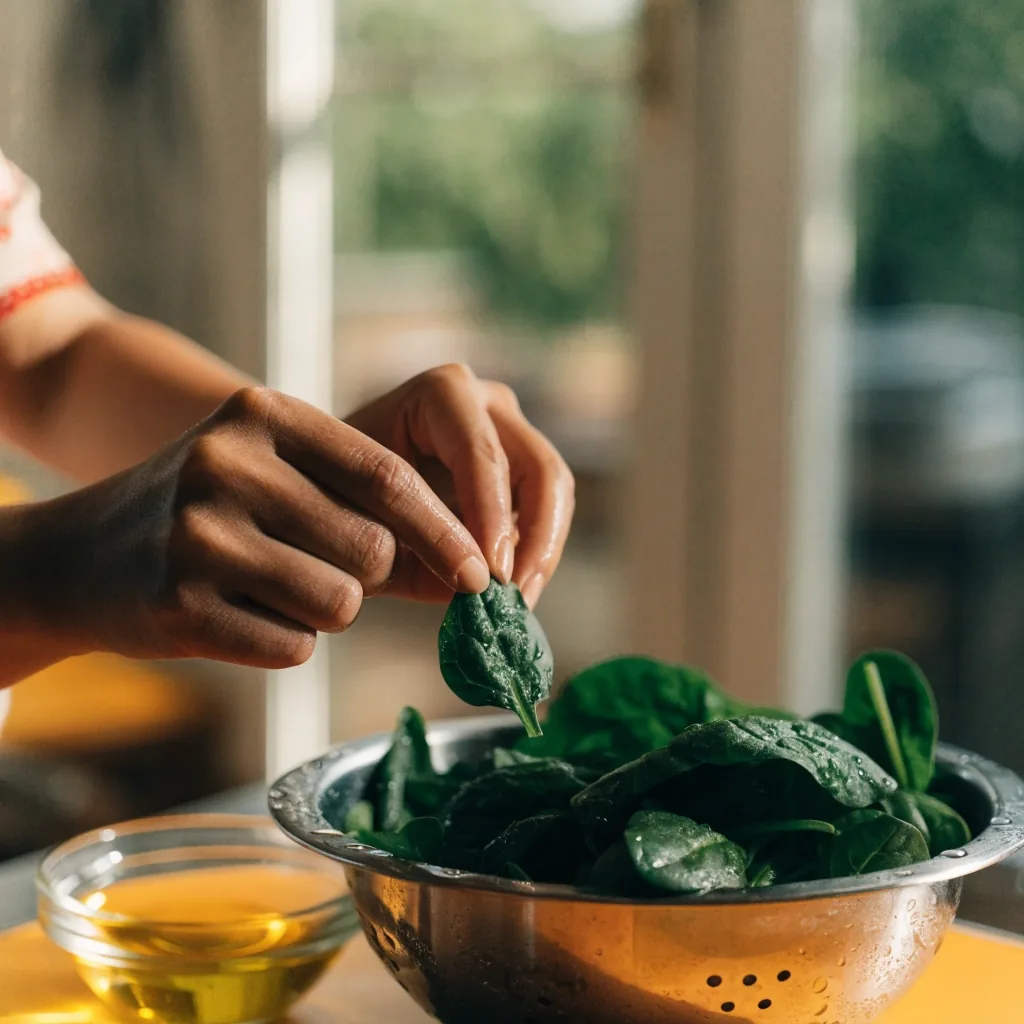
Greens cooked and served with a spoon of oil carry more lutein into the body than a fat-free plate of the same vegetables.
Zeaxanthin
Zeaxanthin is lutein's close relative and sits alongside it in the macula. The two are usually discussed together because they behave similarly and often appear in the same foods, though zeaxanthin is more prominent in corn and orange peppers.
One detail worth knowing: they are both fat-soluble, so a fat-free "healthy" meal is a poor delivery vehicle for them. A spoon of cooking oil on the vegetables solves it.
Where it shows up
Corn, orange bell peppers, egg yolk and the same dark greens that carry lutein. If lutein is on the plate, zeaxanthin usually is too.
How it acts
It sits in the macula alongside lutein and behaves as a pigment there. Because both are fat-soluble, they travel with fa into the body.
Practical habit
Cook the vegetables with a little oil, or eat them alongside eggs, fish or nuts. Skip the fat-free plate.

Where this food actually comes from
Most of the nutrients on this page are in the day-to-day market, not a specialty aisle: kangkung, sawi, corn, orange peppers, sweet potato, eggs, beans and the small fish sold fresh in the morning. A working plate in Jakarta already covers more of this list than most supplement bottles do.
Two vitamins, two different jobs
Vitamin A and vitamin C are often grouped as "eye vitamins," but they do not work the same way. One is structural in the retina. The other is an antioxidant partner. Reading them side by side makes the difference clearer than reading either alone.
Structural role
Vitamin A
Vitamin A has a structural role in the retina that goes beyond antioxidant activity, which is why severe deficiency has visible consequences for vision.
Food sources include carrots, sweet potato, liver, and eggs, with liver being by far the most concentrated. In Indonesia, where rice, tempeh, and greens dominate many plates, sweet potato and eggs are often the easier route.
This is not a nutrient to megadose; more is not better.
Antioxidant partner
Vitamin C
Vitamin C is described as an antioxidant that helps protect eye tissues from oxidative damage. It is included in AREDS-style supplementation discussions for certain AMD patients, though usually alongside vitamin E and zinc rather than as a solo act.
You will find it in citrus, kiwi, berries, tomatoes, potatoes, and leafy greens. Potatoes deserve a mention because they are an everyday source people overlook when they only think of oranges.
Vitamin E
Vitamin E appears in the classic AREDS antioxidant formulation for certain AMD risk groups, and medical sources describe it as an antioxidant that helps protect cells from damage. Nuts, seeds, and vegetable oils are the usual sources.
It is rarely presented as a general cure for poor vision, and it should not be. Like vitamin C, it earns its place as part of a pattern rather than as a standout.
Zinc
Zinc shows up in AREDS formulations used for specific AMD cases, and it is described as important for retinal metabolism and antioxidant defense. The distinction matters: zinc is more relevant to AMD-targeted supplementation than to generic "eye boosting."
Beans, lentils, and nuts are common food sources, all of which are staple ingredients in Indonesian cooking. That is convenient, because it means zinc is not a nutrient you have to go out of your way to find.
Copper
Copper appears in the AREDS formulation mainly as a balancing mineral alongside zinc. It is included because long-term zinc intake can affect copper status in the body, so the two are paired in clinical formulas.
You will not usually see copper presented as a standalone eye nutrient, and we are not going to pretend otherwise. It is a formulation detail, and it belongs in supplement discussions rather than casual food advice.

Selenium
Selenium is described by medical sources as an antioxidant mineral relevant to AMD and cataracts. It appears less often than zinc or lutein in mainstream writing, which is exactly why it is worth a paragraph here.
Fish, eggs, and Brazil nuts are common sources. The sensible framing is as part of overall antioxidant protection, not as something to chase through a dedicated supplement.

Omega-3 fatty acids
Omega-3s are commonly discussed for dry eye and retinal health, but the evidence is mixed for AMD supplements; reviews of omega-3 supplementation have not shown a clear benefit for AMD.
Food sources often listed include fish, flaxseed, walnuts, and tuna. They remain widely featured in eye-health articles because of their role in overall eye tissue function. So: worth eating fish regularly, worth being skeptical of aggressive claims.
Beta-carotene and why it was replaced
Beta-carotene was part of the original AREDS formula, and it is still what gives carrots their reputation. AREDS2 replaced it with lutein and zeaxanthin.
Follow-up data described the lutein and zeaxanthin version as more effective and safer than the beta-carotene version. That single change is the clearest example in eye nutrition of research updating practice, and it is worth understanding before you buy any formula labelled "AREDS."
The one change worth knowing
If a bottle is labelled only "AREDS" without saying AREDS2 and without naming lutein and zeaxanthin, it may be built on the older formulation. Reading the ingredient line is the practical step — not judging the front of the pack.
How the nutrients relate
None of these nutrients works in isolation. Antioxidants interact, zinc and copper need balancing, and the carotenoids compete for the same absorption pathways. This is why single-nutrient supplements rarely match the framing they are sold with.
A plate with greens, fish, beans, and a piece of fruit covers more of the picture than any one bottle. That is the whole practical case for reading a page like this one instead of a label.
A working plate covers most of the list
- Greens cooked with a little oil carry lutein and zeaxanthin together.
- Fish once or twice a week covers omega-3s and selenium at the same time.
- Beans and lentils handle the zinc side without special shopping.
- A piece of fruit or a tomato adds vitamin C and further antioxidants.
Common questions about these nutrients
Four questions that come up often when readers move from a nutrient list to a shopping list.
Do I need to take all nine as a supplement?
No. Most of the nutrients on this page are food nutrients first. Lutein, zeaxanthin, vitamin A, C, E, zinc, copper, selenium and omega-3s all have real food sources you can buy in Indonesia. Supplementation is a specific conversation for specific people, usually around AMD risk, and it belongs with a qualified professional rather than a general shopping trip.
If lutein and zeaxanthin are the most eye-specific, why bother with the rest?
Because a nutrient does not have to be eye-specific to matter to the eye. Vitamin C and vitamin E work as antioxidant partners, zinc supports retinal metabolism and antioxidant defense, and selenium does antioxidant work across the body. None of them outshine the carotenoids for the retina, but they help hold the overall pattern together.
Does cooking destroy these nutrients in vegetables?
Cooking greens actually helps with lutein and zeaxanthin, because it softens the plant cell walls and makes the carotenoids easier to release. What matters more is what you serve with them: since both are fat-soluble, a spoon of oil on the vegetables improves absorption far more than the cooking method does. Boiling them into a fat-free broth undercuts the effort.
What should I ask when comparing eye supplements?
Start with the ingredient line, not the front of the bottle. Does it name lutein and zeaxanthin, or beta-carotene? Does it balance zinc with copper? Is omega-3 being sold as an AMD benefit when reviews have not supported that? If any answer is unclear, the label is doing more marketing than explaining.
Where to go next
Take the next step that fits your situation
If you want the food side first, the food sources page lists everyday ingredients and how they fit a plate in Indonesia. If you are trying to read a supplement label, the AREDS and AREDS2 page explains the formulation change. If you have a specific question about your own situation, contact is the right door — this page is educational content, not a diagnostic or prescription resource.
Educational note
This page is general information about nutrients and food. It is not medical advice, and it does not replace a consultation with a qualified professional.
Questions about your own situation
Reach the team directly during working hours, Monday to Friday, 09:00–18:00 WIB.
Contact Insightful Eye OpenAbout this resource
Insightful Eye Open explains essential nutrients for healthy eye function, including lutein, zeaxanthin, omega-3s, zinc, and AREDS formulations, for readers in Indonesia.
About this resource