
Supplements and
Eye supplements and the
Supplements are not the villain of this site, and they are not the hero either. They are a category where the gap between what the research covers and what the marketing claims is unusually wide. This page is about closing that gap: when supplements get discussed with a clinician, how to read a label honestly, and what a formula can and cannot tell you about itself.
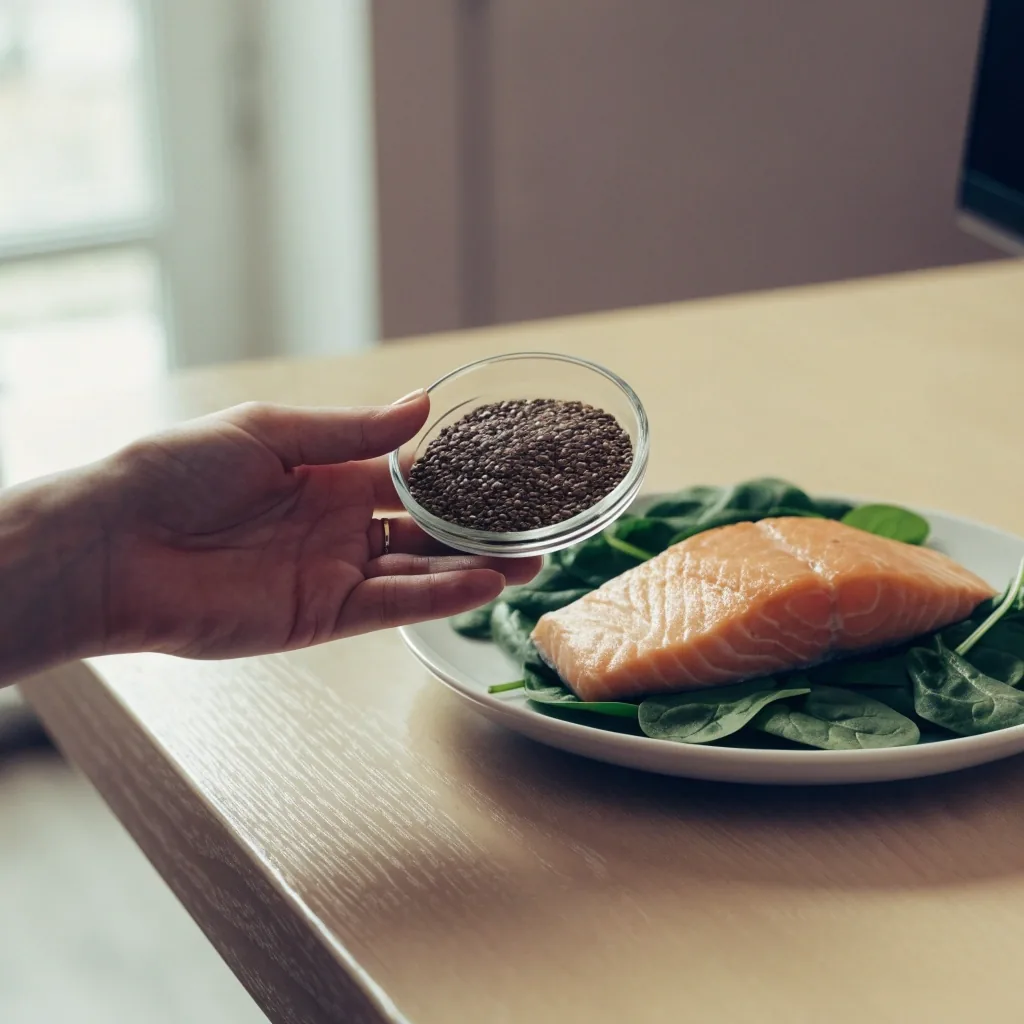
Written for readers in Indonesia weighing an eye supplement against what the research actually studied.
Start with when they come upWhen supplements enter the conversation
The clearest case in eye nutrition is AREDS2-style supplementation for people with certain stages of AMD. That is a clinical situation with a clinician in the room, not a decision made from a search result. Outside that context, the discussion shifts to diet, and most readers who ask us about supplements end up there. There is no shame in either route; they are just different questions.
It helps to know which question you are actually holding. If you have been told you have an intermediate stage of age-related macular degeneration, the conversation is about a specific formula studied in a specific group. If you have not, the conversation is about what you eat across a normal week, which is a different piece of work with a different timescale. Mixing the two is where most confusion starts, and it is usually the reason a search result feels more confident than the situation deserves.

What “AREDS-style” is meant to signal
An AREDS-style formula should resemble the studied mix: vitamin C, vitamin E, zinc, copper, and either beta-carotene or the lutein and zeaxanthin pair. The phrase has become a marketing shorthand, so the ingredient list is the only thing worth trusting. If a label borrows the name and lists something else, the resemblance stops at the wording. This is the kind of thing worth checking before price or brand.
The name travels further than the evidence does. A product can carry the words, print them larger than the ingredient list, and still hold a mix that no study ever tested. That is why we suggest reading from the back of the pack forward: ingredients first, dose per serving second, price and brand last. It is a slower way to shop, and it is the only order that answers the question you actually have.
Compare the right thing
Compare the ingredients against a studied formula, not against the front of the box. The front of the box is written to be bought.
Count the capsules
Look at how many capsules one serving requires. A dose split across several capsules tells you something about how concentrated the product is.
Weight amounts over lists
Ingredient amounts matter more than the number of ingredients listed. Long lists look impressive and often signal very little.
Reading a label without being misled
Habit one
Read against a studied mix
Put the ingredients beside the formula the research used, not beside the promises on the front. If the list does not resemble vitamin C, vitamin E, zinc, copper and one of the two carotenoid options, the resemblance stops at the wording on the lid.
Habit two
Work out the serving size
Check how many capsules make one serving. A product that asks for four capsules a day is telling you it is dilute; a product that asks for one may be packing the same amounts into less space. Neither number is a verdict on its own, and both are more informative than a headline claim.

Both habits are unglamorous, and both take under a minute once you know what you are looking for. The habit that fails is reading the front of the pack first, because everything on the front was written to survive exactly that glance. Turn the bottle around before you decide anything, and you will already be reading it more carefully than most shoppers do.
Keep the ingredient list in your notes app if you are comparing brands over a few weeks. Names on packaging change, and the list you saved is the only version you can check later.
The dosage question
More is not better, and this is especially true for vitamin A and beta-carotene. Medical sources do not present these formulations as a general cure for poor vision, and exceeding studied amounts is not supported by anything in that research. If a product’s pitch relies on being stronger than the formula it copies, that is a reason for caution rather than enthusiasm.
Some nutrients are more forgiving of a large dose than others. The fat-soluble ones, and the carotenoids in particular, are where a bigger number stops being a selling point and starts being a question worth asking out loud.
Studied amounts
The research behind AREDS2 worked at fixed amounts of each nutrient in the tested mix. Those amounts are the reference point worth comparing against, and they are what the formula’s name is supposed to point to.
Stronger than the formula
A label that advertises a multiple of the studied dose is advertising something the research did not test. That is the whole of the argument, and it is enough to slow down before buying.
If you already take a supplement, bring the actual packaging to the appointment. Ingredient lists are easier to discuss than descriptions of them.
Why food still comes first
For general eye health, the dietary route covers the same nutrients with less risk of imbalance. Vitamin C and vitamin E arrive with other compounds in food, zinc comes with protein, and the carotenoids come with fa that helps absorption. Supplements isolate; food does not. That is not an argument against supplementation in as a substitute for vegetables.
There is a practical side too. A plate of food is a mix you cannot accidentally overdo in one nutrient while ignoring the rest. A capsule hands you one ingredient at a fixed amount and leaves everything else unchanged, which is exactly why it belongs in a conversation rather than in a shopping habit.

Questions to bring to a clinician
Four questions, each with a real answer rather than a slogan. Write them down before the appointment; eye consultations move fast, and the question you meant to ask is the one that gets dropped.
Am I in the group the research covered?
The AREDS2 work looked at specific patient groups with certain stages of AMD. Whether you sit in one of those groups changes the whole conversation, and it is a question only your own clinical picture can answer.
Which version fits my situation?
The beta-carotene version and the lutein and zeaxanthin version are not the same choice for everyone, and there are reasons a clinician might steer you toward one over the other.
Does anything interact with what I already take?
Bring the full list, including anything you take without thinking of it as medicine. Interactions are one of the few parts of this subject where a short conversation can change the answer outright.
Is there a reason to prefer food in my case?
For many readers the answer is yes, and it is worth hearing that directly rather than inferring it from a page like this one.
What we won’t do on this page
We won’t tell you a specific product to buy, and we don’t publish invented reviews or ratings. We also won’t claim a supplement prevents a condition or restores vision. Those claims exceed what the research behind these formulas supports, and repeating them wouldn’t help you make a better decision. If you want a brand recommendation, a clinician who knows your history is the better source.
That restraint is deliberate. A page that refuses to name a winner is less satisfying to read and more useful to act on, because the variables that decide the answer sit in your history rather than in a ranking.
A realistic expectation to carry out
Nutrition for eye health is slow and cumulative. Whether it arrives through food or a formula, the timescale is years, not weeks, and the goal is usually maintaining function rather than improving it. That is a modest frame, and it is the honest one. Readers who arrive expecting a transformation tend to leave disappointed; readers who arrive with a question tend to get a useful answer.
Common questions
The four questions readers send us most often about eye supplements and label reading.
Does this site recommend eye supplements?
For general eye health, we point to food first. Supplements come up mainly in the MD, which is a discussion to have with a clinician.
How can I tell if a formula resembles a studied one?
Check the ingredient list: vitamin C, vitamin E, zinc, copper, and either beta-carotene or the lutein and zeaxanthin pair. If the list doesn’t resemble that, the AREDS name on the front isn’t telling you much.
Do eye supplements prevent eye disease?
The AREDS2 research looked at reducing the risk of progressing to advanced AMD in specific patient groups. It didn’t establish prevention in the general population, and claims along those lines go beyond the evidence.
Are more ingredients better in a supplement?
Not necessarily. Ingredient amounts and whether the mix resembles a studied formula matter more than the length of the list. Long lists are easy to assemble and tell you little.
Still weighing it up? Send us the question you actually have.
If a label is confusing you, or you want a second read on whether a formula resembles the studied mix, write to us with the ingredient list in front of you. We answer questions about nutrients and label reading; we don’t give individual medical advice, and we will say so plainly when a question belongs with your clinician rather than with us.
Insightful Eye Open is an educational resource based in Jakarta. You can reach us at [email protected] or on +62 21 5239 4840, Monday to Friday, 09:00–18:00 WIB. Our address is Jl. Cikini Raya No. 58, Menteng, Jakarta Pusat 10330, Indonesia.
Nothing on this page is medical advice, and none of these formulas is a medicine. If you are considering a supplement, talk it through with a qualified professional who knows your history.